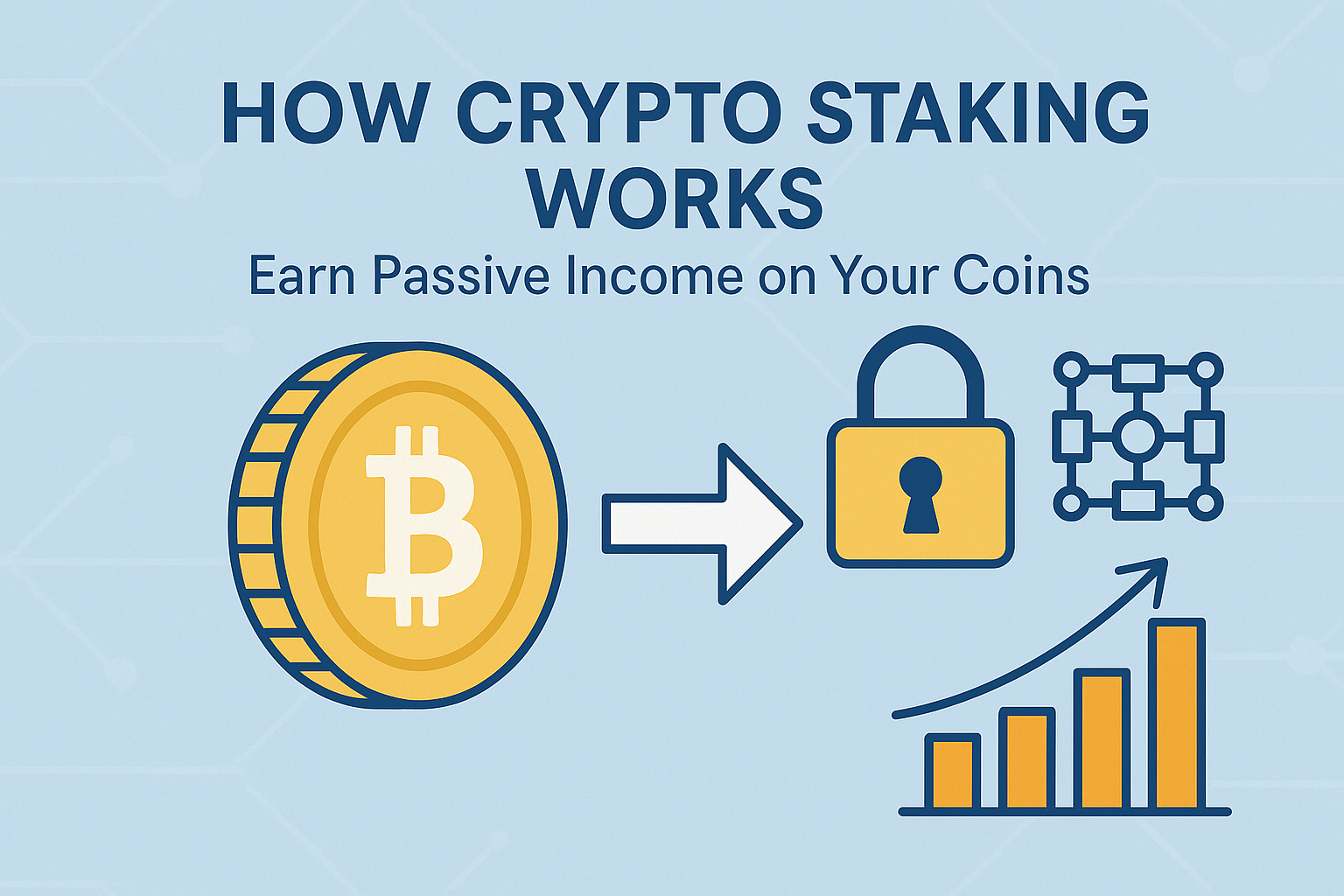
What Is Crypto Staking?
Crypto staking is a way to earn passive income by locking your coins to help secure blockchain networks. In return, you receive staking rewards — similar to earning interest, but in a decentralized, blockchain-powered system.
When you stake, you delegate your crypto to validators who verify transactions and maintain the network. In exchange, you’re rewarded in tokens. Popular staking coins include Ethereum (ETH), Cardano (ADA), and Solana (SOL).
Why Do Blockchains Use Staking?
Not all cryptocurrencies can be staked — staking applies to networks using Proof of Stake (PoS) or similar consensus mechanisms.
In a PoS system, validators are chosen based on the amount of crypto they’ve staked, not computational power. This makes staking:
-
More energy-efficient
-
More accessible to everyday investors
-
Better for network decentralization
How Does Crypto Staking Work?
Here’s how to get started with staking in five simple steps:
-
Buy a PoS coin such as ETH, ADA, or SOL.
-
Choose your staking method: via exchange, wallet, or validator.
-
Delegate your tokens to a validator.
-
Earn rewards as they confirm transactions.
-
Unstake anytime (depending on network rules).
Different Ways to Stake Crypto
1. Centralized Exchanges (CEX)
Platforms like Binance, Coinbase, or Kraken make staking easy for beginners.
Pros: Simple setup, automatic rewards
Cons: Lower yields, custodial (you don’t control private keys)
2. Software Wallets
Wallets like Trust Wallet, Exodus, and Keplr allow native staking.
Pros: You maintain full control of assets
Cons: Slightly more technical setup required
3. Running a Validator Node
For advanced users wanting total independence.
Pros: Maximum rewards, complete ownership
Cons: Requires 24/7 uptime, technical expertise, and high minimums (e.g., 32 ETH)
Typical Staking APY (2025)
| Coin | Estimated Annual Return |
|---|---|
| Ethereum (ETH) | 3–5% |
| Cardano (ADA) | 4–6% |
| Solana (SOL) | 6–8% |
| Avalanche (AVAX) | 7–10% |
| Polkadot (DOT) | 10–14% |
What Are the Risks of Staking?
While staking is often viewed as “passive income,” it carries risks:
-
Slashing: Misbehaving or offline validators can lose your staked coins.
-
Lock-up periods: Some networks require waiting days or weeks to unstake.
-
Market volatility: If the token value drops, your rewards lose value too.
-
Custodial risk: When staking on exchanges, you don’t control your private keys.
🔐 Always research validators and platforms before staking large amounts.
What Is Liquid Staking?
Liquid staking lets you stake your coins but still keep a tradeable “receipt token” (like stETH on Ethereum). You can use it in DeFi platforms for additional yields.
Popular liquid staking platforms:
-
Lido.fi
Pros: Flexibility, composability with DeFi
Cons: Smart-contract and liquidity risks
Best Tools & Platforms for Staking
-
StakingRewards.com – Compare yields and PoS networks
-
Lido.fi / Rocket Pool – Ethereum liquid staking
-
Exodus Wallet – Simple and beginner-friendly
-
Keplr Wallet – Great for Cosmos ecosystem
Final Thoughts: Should You Stake?
Crypto staking is one of the easiest ways to earn passive income while supporting the blockchain ecosystem.
It’s ideal for long-term believers who want to see their holdings grow while helping secure the network.
However, always:
-
✅ Understand lock-up periods
-
✅ Use trusted validators
-
✅ Diversify across multiple networks
-
✅ Keep your private keys safe
Remember: Staking rewards are never “free money” — they’re compensation for helping the system stay secure and decentralized.
Want the latest staking yields, DeFi trends, and crypto insights?
Subscribe to TheCryptoTips Weekly Newsletter for updates and expert guides.